

What is Brownlow even for? I’ve been asking myself that question my entire life because it doesn’t seem like even Brownlow knows. I’m not sure it’s had to. Until recent years people just tended to stick close to where they were born so identity didn’t really matter, it just formed naturally. I even moved back without knowing the answer, I just wanted a cheap place that would let me write not too far from the rest of the world. But now I realize that is the answer.
Before I’d considered living anywhere else my dream was to live in a carriage house in the country. I wanted something cheap that was mostly shop space but funky and inspiring, maybe a little traditional. I’d seen an old carriage house where I could build a simple apartment upstairs and spend my time writing and working on old sailboats downstairs but, of course, I didn’t have any money even though I only needed a little. I needed to go to school first and that meant leaving.
Like any good Brownloafian I was sure that I would hate Toronto but that’s where the rest of the world opened up to me. Toronto is a city of neighbourhoods. It began just like every other town in Ontario: a strategic point on a colonial grid equidistant to other strategic points on that same colonial grid. But for various reasons it grew and those points became neighbourhoods instead of towns as the spaces between were taken up by new communities. Those neighbourhoods and communities migrate around and change hands. Things were rebuilt and modernized. Today the GTA is a dense urban centre making up one-fifth of Canada’s population. It’s also in the running for the most multicultural city in the world, the primary competition being Vancouver. All you need are some transit tokens or a bicycle and you can experience anything the world has to offer, often on the cheap. That is, if you can afford rent in one of the most expensive places to live… in the world. So when it came time to chase a dream I moved home.
That doesn’t always seem like a good idea because while Brownlow is a perfect place to build new things it’s not a great place to support them. It’s not big enough to develop a variety of healthy subcultures, the economy isn’t strong enough to take chances, and the people who do have money to spend are not used to spending it. It’s a risk averse community of late-adopters and it’s easy to see why. Brownlow has been kicked around over the years. Yet post-pandemic it’s the obvious choice for people looking to start something new because they’re no longer limited to the local market. I’m not going to be the only one moving home to Brownlow to pursue a flight of fancy: that’s what it’s for. That’s what it’s always been for.
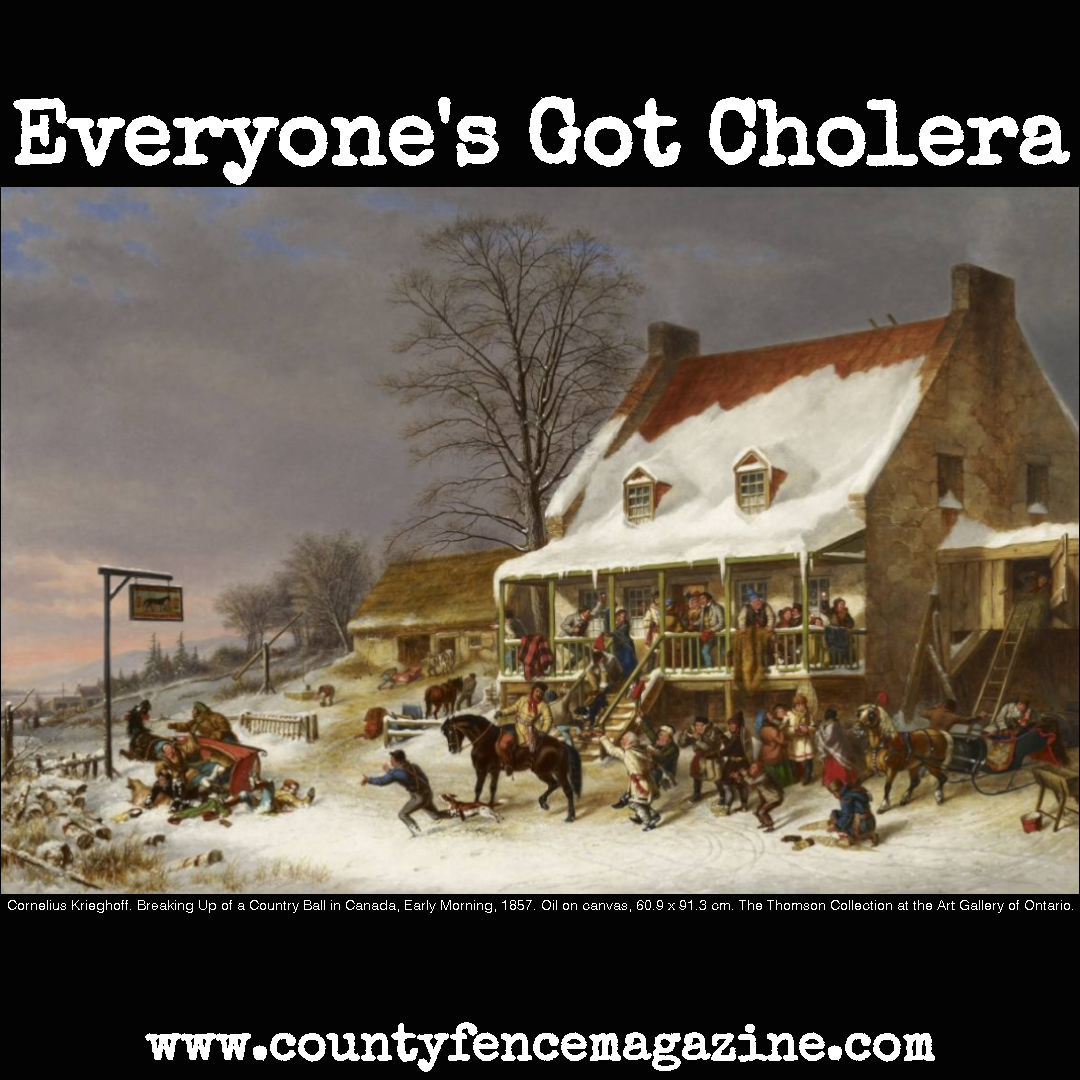
From the earliest European settlement in Brownlow it’s been a low-risk place to experiment. Because it’s not the best land it’s the place to try things that might not work out. Because it’s not the city it’s a little easier to build something from scratch. Brownlow’s biggest liability is also it’s biggest strength: as patron saint of County Fence Bi-Annual Al Purdy said, “it’s a little adjacent to where the world is.” I’m not clear on what indigenous life was like prior to European contact and they have rightly not appreciated what’s happened since but in the mean time it’s been about trying your luck at something different.
Naming versus proclaiming: In a previous life I worked in the much, and rightly, maligned world of corporate visioning. Usually businesses reach for a visioning consultant when things aren’t going their way and the job is to construct a new vision, one in line with management’s whims of the week, rather than painting a picture of what’s already there. My job typically wasn’t to name and nurture what already existed but rather to make sure everyone was on the same page, to define a goal for people to get behind — or leave. Which is why I left. Vision is not about new things, it’s about looking in the mirror and finding a way to love what you see.
When I look at Brownlow I see a place of imagination. I also see a place where that sense of imagination has been systematically squashed for generations to the point where the population is so frustrated and self-hating that all they can do is roll coal in the face of anyone different in an effort to show that they’re not different. The history of this place is that it was seized from the original residents by industrialized colonial powers in order to strip it of it’s resources. When those resources were gone and the agricultural value of the land was deemed poor they dumped Irish economic refugees on it. Those hard-working people struggled and built something out of it yet over the past half-century most of that industry has moved elsewhere too. You can’t blame Browloafians for building their culture around having nothing and expecting to loose what they have managed to scrape together. You can’t blame them for thinking anything but subsistence living happens in the evil elsewhere. That’s been the reality for two centuries. But hardship breeds creativity and, as those famous imagineers the Scots-Irish knew very well, the harshest environments are also the most inspiring. So why isn’t creativity what we’re known for?
Something I’ve found frustrating about writing is the expectation of conformity. The entertainment industry is risk-averse. Publishers aren’t nearly as strong as they used to be and they’re inundated by manuscripts so they’re not taking risks. Movies these days are huge endeavours requiring hundreds of people and studios are massive corporations with vast assets employing thousands of people. Perhaps it’s not surprising that these businesses have merged in order to assume the risk of these huge investments. Canada has tried to circumvent these problems but our entertainment industry is small and our systems of grants and investors encourage a certain conformity themselves. Brownlow could blow right out of that. It could be the alternative. That’s because it’s always been the alternative.
Brownloafians are natural storytellers. If they’re not indigenous (an incredibly rich and imaginative outsider culture charting their own path) they’re often of Scots-Irish decent: nations well known for making storytelling one of their primary exports. If that’s not enough Brownlow is very blue-collar and blue-collar people tell stories like Canadians play hockey: it’s so natural they don’t even realize they’re doing something special.
So what do you do with a community of excellent storytellers who love building things, are lacking industry, have a world class waterfront, at least three distinct geographic regions within twenty minutes, and are equidistant to Toronto and Montreal? I think it’s ripe for a movie industry, one completely unique to this place. Maybe fifty years from now they’ll call our style The Brownlow School.
-Greg