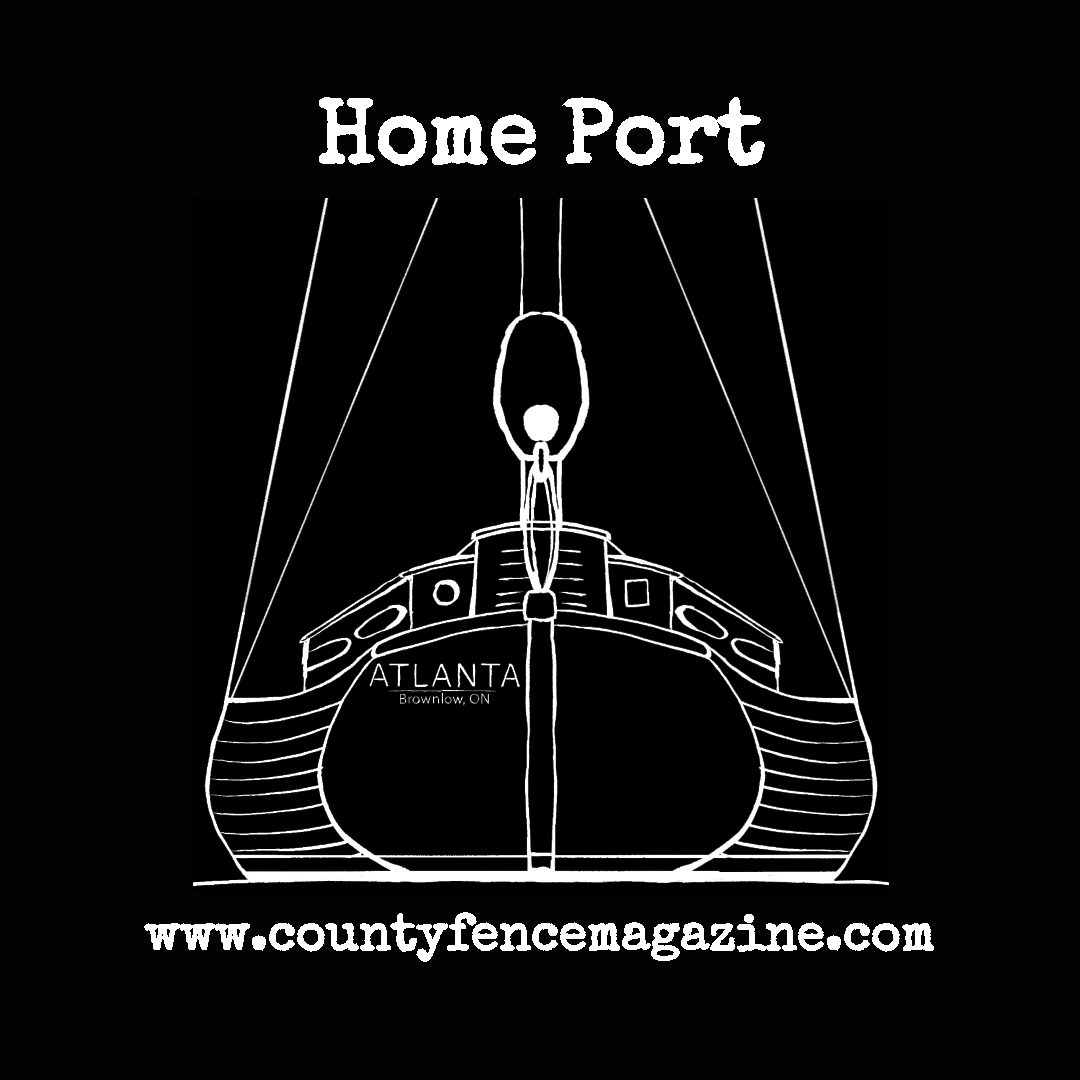


Jules Horatio Octavian bought the neglected sailing yacht Atlanta in the fall of 1964 and it has been taking him on adventures near and far ever since. An oasis of exotic oiled woods, brass, and good scotch it’s not just a place to escape from the world, it’s a place that encourages you to run and hide.
As a member of the #VanLife army I understand wanderlust well. When I was a teenager I didn’t know what I wanted but I was sure I wouldn’t find it here. Then as a young adult I still didn’t know but had just scraped together enough to buy and outfit a van so I could find out. I’ve seen a good deal of the world by now and I’m still not sure I’ve found what I’m looking for but it turns out I’d been riding my bike past Atlanta my entire childhood.
Sailing is not something I’ve ever taken much interest in. Nobody in my indoors-loving family ever took much interest in boats and sailing always seemed to be a lot of work for a slow and dangerous way to get around. I didn’t want to have to learn knots or sailing theory just to drive around an expensive hunk of plastic at jogging speed. But perhaps I’ve been wrong.
Atlanta is a special boat and not the kind just anyone owns. To begin with, as Jules explained to me, wooden boats must maintain a perfect balance of degeneration in order to stay afloat and last for any length of time. The planks must absorb water and expand in order to keep the seams watertight, but damp wood also rots. This is fine, Jules tells me, because with a little extra maintenance it’s easy to keep the planks at the perfect balance of moisture to stay wet without rotting too fast. What’s more, if a plank does rot it’s not hard to simply replace it. This is so common that the ancient greeks had a philosophical problem based around it: if a man named Theseus replaces every piece of wood on his ship over time — is it the same ship? In any case, boat people are a special breed and wooden boat people seem to be a special breed within that subset. Jules Octavian has been blessed with both free time and a love for detail work, which has been excellent news for his friends who get to sail aboard Atlanta without having to know any of this.
So in one sense all wooden boats are special but Atlanta is special because of the relationship she has with her owner. For one it’s long and intimate: Jules has owned her nearly all his adult life and the two spent a few years in the late sixties circumnavigating the world. Since then the two have puttered extensively around The Great Lakes as well as some longer trips, though that first circumnavigation was long enough to avoid a repeat.
Atlanta is also special because of her origin story. She’s a local design from the peak, and thus tail-end, of Brownlow’s once-thriving maritime industry. As readers well-know Brownlow was originally selected for it’s excellent, albeit shallow, natural harbour. These were the days prior to even steam locomotives when a town being located on the waterfront was as vital as being located on a highway today. Atlanta was designed for ocean travel but also the local shallow waters for the head of a local boatyard. Fortunately for Jules, because even he couldn’t have afforded a new wooden boat in those days, she had fallen into disrepair and he was able to nurse her back to health.
On deck it’s a classic shape, tapering gracefully at both ends with oiled wood planking in-between that is lovely on bare feet. There’s ropes and brass winches for I don’t know what scattered about and it’s steered by a giant log of a tiller that is much easier to control than it looks, but I guess that’s what you get with the culmination of thousands of years of commercial shipbuilding expertise. Truth be told I don’t care about much of that, rather I’m more interested in how comfortable it is to lounge around in the sun or with a drink at the end of the day and Atlanta excels at this. With ample space to lie out on deck at the bow and a deep cockpit with wrap-around bentwood seat-backs that keep you secure even in pounding waves it’s a wonderful place from which to experience the watery part of the world.
Down below is where Atlanta really comes into her own. Jules tells me that true sailors avoid the cabin as much as possible: it’s where you’re most likely to get seasick and sailors are in it for the great outdoors anyway. But I’m here to say that it is the most cozy place I have ever experienced. Amenities are naturally somewhat minimal: the kind of tiny kitchen from which we get the term galley, makeshift berths tucked artfully here and there, and central to it all a comfortable dining table. But perhaps so fitting to what I’ve learned about Jules Octavian’s preferences: boat amenities are often simple yet that doesn’t stop them from being rich. Everything is joyously functional, satisfyingly solidly built, and made out of indulgently finished exotic wood. If that’s not enough, to one end of the table is the cutest little wood stove capable of a surprising amount of heat. It’s the kind of place where one could curl up with a good book and never leave.
Speaking of books, Jules has established quite a library aboard Atlanta. Obviously space is at a premium but there remains a few feet of satin-finished mahogany shelf with a beautifully aged brass rod to keep books in place when the boat rocks. Jules is an avid reader and HQ is lined with books but aboard Atlanta is where he keeps his desert island reads, the ones he returns to again and again: Atwood, Vonnegut, Adams, Pratchett, Murakami, Gladwell, Leacock, Monroe, Ondaatje, Davies, Mowat, and of course Purdy. It’s also the place where he has penned, or should I say typed, a good deal of County Fence articles and more on the beautiful custom burgundy Olivetti Lettera 22 typewriter he’s kept aboard since that first circumnavigation. Mooring rights are enshrined in our laws which means aside from maintenance and fuel it costs nothing to traverse the waters and drop anchor in some idyllic cove in order to spend a weekend, or three, hammering away at a new story and reading old favourites.
Sailing is something that, while not unique to Brownlow, is certainly well-suited. Marina space is relatively affordable, there are hundreds of kilometres of protected shorelines, it’s adjacent to The Thousand Islands, and The Great Lakes offer some of the best sailing in the world that would take a lifetime to explore. The thing that I am learning about my home town that I wish I knew earlier is that it’s a place that invites you to chose your own adventure, it’s not going to offer you one pre-packaged, and sailing might be the perfect way to make that adventure. Even if it is a small part of the world slightly adjacent to anything else going on, sailing scales to that quite well.
The other thing I learned about sailing is that it is best paired with good food — and Jules Octavian knows good food. With Jules it’s all about who you know, I’m not sure he gets much from traditional sources and it all comes with a story, which might be as much the point as the food itself. Smokey babaganosh, exotic cheese, shrimp scampi, fresh baked bread, grilled steak, baked potatoes, the juiciest of perfectly ripe mangos, a bottle of red from his personal stash, and double chocolate chip cookies at midnight. The cookies are his boat recipe, he says. The oven takes the edge off a chilly cabin and fresh baked chocolate cookies pair perfectly with midnight stargazing and a swim. Spending a long weekend holed up on a beautiful sailboat with good food is as good as it gets and might be an experience uniquely best enjoyed in Brownlow, or at least with Brownlow as your home port.
-Rachael